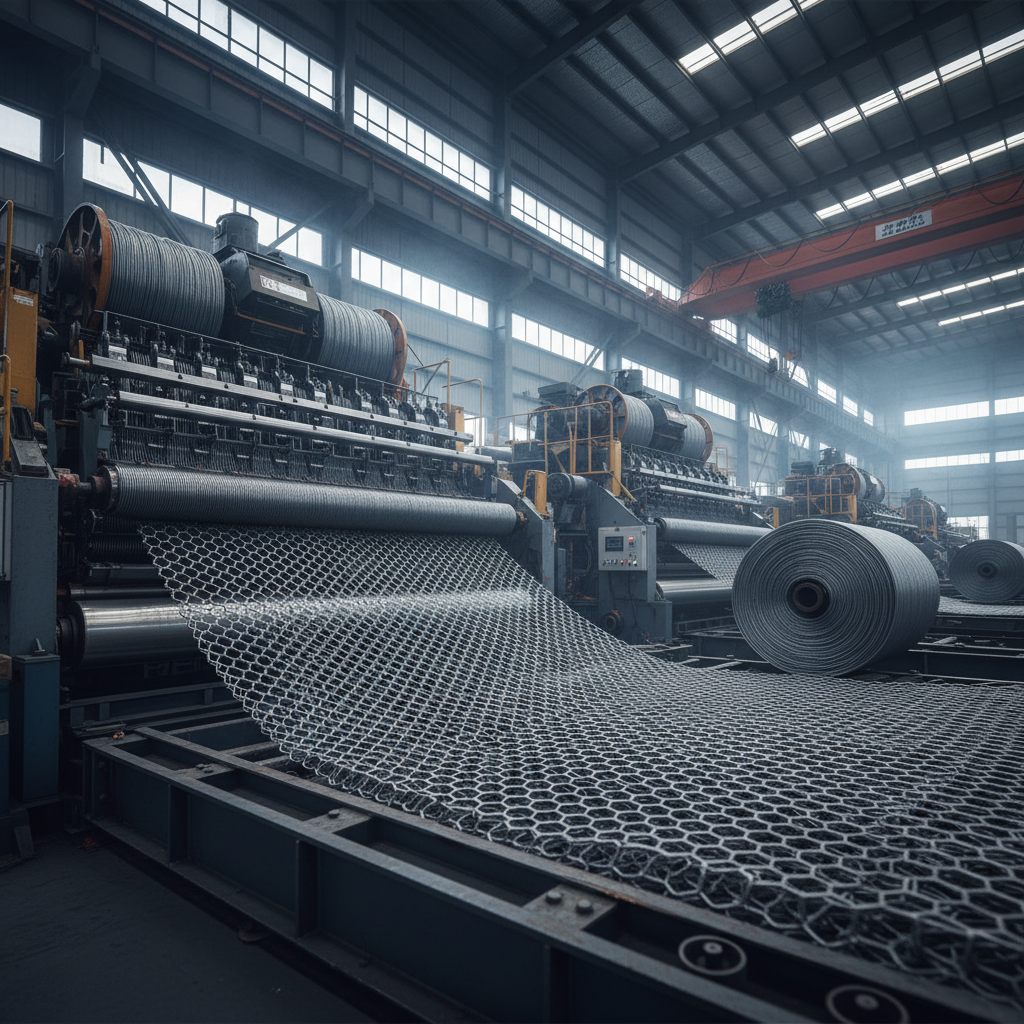
To be honest, this whole iron wire mesh factory business… it’s been a whirlwind lately. Everyone’s chasing higher strength, lighter weight, faster deployment. It used to be, you wanted a fence, you got a fence. Now? It’s gotta be modular, foldable, self-healing practically. I've been on sites all over, seeing what guys are actually asking for. And it's not always what the engineers in the office think.
Have you noticed how everyone's talking about prefabrication? It’s bleeding into everything, even something as seemingly simple as wire mesh. Folks are realizing the labor cost savings are huge. Less welding, less on-site cutting. But, and this is a big but, you gotta get the specs right from the start. A slightly off tolerance and the whole modular system falls apart. I encountered this at a factory in Tianjin last time; a whole shipment of mesh was rejected because the hole size was 0.5mm off. 0.5mm! Can you believe it?
It all starts with the wire, obviously. We mostly use Q235 steel, it’s the standard. Feels… solid, you know? Not like some of that flimsy imported stuff. Smells like metal, obviously. The real trick is the galvanizing. Hot-dip is king, always. Electro-galvanized? Forget about it. Doesn't hold up in salty air, and I’ve seen it flake off after only a few months. Then there’s the PVC coating, sometimes. Adds color, a bit of corrosion resistance. But it gets brittle in the cold, that's a pain.
Industry Trends & Design Pitfalls
Strangely, a lot of designers seem to forget that this stuff gets handled. A lot. Workers are dragging it, bending it, sometimes even standing on it. I’ve seen designs that look beautiful on paper, all fancy curves and intricate patterns, but are a nightmare to install. Too fragile. You need robustness. I'm seeing a push for hexagonal mesh lately, it’s surprisingly strong for its weight. But the welding points… that's where things can fall apart.
The biggest pitfall? Underspecifying the coating thickness. Guys think they can save a few pennies, but it always comes back to haunt them with rust. Always.
Material Specifics & Handling
We mostly stick with galvanized steel, as I said. Sometimes stainless, but that’s pricey, mostly for coastal projects. The thickness of the wire is crucial, obviously. 12 gauge is pretty standard for fencing, but you go thinner and you’re asking for trouble. Handling it… well, you need gloves. Seriously. Those cut ends are sharp. And watch for oil residue from the manufacturing process. It makes it slippery. I’ve seen guys take a tumble more than once.
There’s a lot of debate about wire diameter versus aperture size. Smaller aperture means more security, but it also means more steel, more weight, more cost. It’s a balancing act. And don't even get me started on different weave patterns. Chain link, square weave, hexagonal... each has its pros and cons.
Anyway, I think proper storage is overlooked. Stacking it neatly, keeping it dry… simple stuff, but it makes a difference. Especially with the PVC-coated stuff. Leaving it in the sun for too long and the PVC gets brittle and cracks.
Real-World Testing & Performance
Forget the lab tests. Seriously. They’re good for basic quality control, sure, but they don’t tell you how the mesh will actually perform. I always insist on field testing. Put it up on a real site, expose it to real weather, see how it holds up. I once saw a mesh fail during a windstorm because the fasteners were cheap. The mesh itself was fine, but the fasteners sheared off. That was a costly mistake.
Pull tests are useful, too. Just grab a section of the mesh and try to rip it apart. Simple, but effective. It gives you a good feel for the overall strength and integrity. We also do salt spray tests, obviously, to check the corrosion resistance. But again, it’s not the same as leaving it exposed to the elements for a year or two.
The key is to simulate real-world conditions as closely as possible. What kind of stress will it be subjected to? What kind of weather will it encounter? What kind of abuse will it take? If you can answer those questions, you’re on the right track.
Actual Usage vs. Intended Usage
This is where it gets interesting. Engineers design this stuff for a specific purpose, but users always find new ways to use it. I've seen it used as a trellis for climbing plants, as a makeshift chicken coop, even as a support for a hammock! You never know what people are going to do with it.
Sometimes, they use it in ways it was never intended to be used. I saw a guy using it to reinforce a crumbling retaining wall once. Not ideal, but it worked… for a while. The mesh eventually buckled under the pressure, but it bought him some time.
iron wire mesh factory Performance Metrics
Advantages, Disadvantages, & Customization
Look, the advantages are pretty clear: cost-effective, durable, easy to install. It's a workhorse. But it’s not perfect. It can rust, it can be cut, it’s not the prettiest thing in the world. But for most applications, it gets the job done.
Customization? Absolutely. We can adjust the mesh size, the wire gauge, the coating, the height, the width… you name it. Last week, a client wanted a specific shade of green to match their branding. It was a pain, sourcing the pigment, but we did it. It's those little details that make a difference.
Customer Story: Shenzhen Smart Home
Last month, that small boss in Shenzhen who makes smart home devices insisted on changing the interface to . Seemed odd, right? It was for an enclosure, a security cage basically, around their new outdoor sensor. He said he wanted it to look "modern" and “techy”. Anyway, we had to retool the whole production line, and it added a week to the lead time. Turned out, his designer just thought it looked cooler. Totally impractical, but hey, it was his money. The cage worked fine, of course, it’s wire mesh, what could go wrong? But the extra cost… ugh.
That’s the thing, you learn to expect the unexpected. Clients always have ideas. Sometimes they’re good, sometimes they’re… less good.
Anyway, I think he just wanted to one-up his competition.
Performance Metrics & Quality Control
We track a bunch of metrics, obviously. Wire diameter, mesh opening size, coating thickness, tensile strength… all the usual stuff. But the most important metric, in my opinion, is customer satisfaction. If the customer is happy, we're doing something right.
Quality control is a pain, honestly. You need to check every batch, every roll, every weld. It's tedious, but it's essential. We use a combination of automated inspection and manual checks. Automated catches the big stuff, manual catches the little stuff. It's a good system.
The whole supply chain needs to be monitored, too. From the steel mill to the galvanizing plant to our factory, every step needs to be controlled. If one link in the chain breaks, the whole thing falls apart.
Key Quality Control Parameters for iron wire mesh factory
| Parameter |
Acceptable Range |
Testing Method |
Frequency |
| Wire Diameter (mm) |
+/- 0.05 mm of specification |
Digital Caliper |
Per Batch |
| Mesh Opening (mm) |
+/- 0.2 mm of specification |
Ruler/Template |
Per Roll |
| Galvanizing Thickness (µm) |
> 60 µm |
Magnetic Coating Thickness Gauge |
Per Batch |
| Tensile Strength (MPa) |
> 380 MPa |
Tensile Testing Machine |
Per Batch |
| Weld Strength (N) |
> 150 N |
Pull Test |
Random Spot Checks |
| Corrosion Resistance (Salt Spray) |
> 120 hours (no rust) |
Salt Spray Chamber |
Per Batch |
FAQS
For high security, you want to go heavy. 10 or 11 gauge is the sweet spot. Anything thinner and it's too easy to cut. The smaller the mesh openings, the better, too. You want to make it as difficult as possible for someone to get a foothold. Remember to consider the type of fasteners and the post spacing, that's all part of a secure system.
It depends on the environment. In a dry climate, it can last 20-30 years easily. Coastal areas? More like 10-15. The quality of the galvanizing is key, and any scratches or damage to the coating will accelerate corrosion. Regular maintenance – cleaning and repainting – can extend its lifespan.
It depends. Aesthetically, yes, it looks nicer. It adds a bit of corrosion resistance, but it’s not a miracle cure. The biggest benefit is if you need a specific color. But keep in mind, PVC gets brittle in cold weather. It's also more expensive, and it adds a layer of complexity to the manufacturing process.
Not using the right fasteners! I see that all the time. And stretching the mesh too tight. It needs a little bit of give. Also, not properly securing the bottom of the mesh. Animals will find a way under it, guaranteed. And finally, not checking the tension regularly. It can sag over time, especially in hot weather.
Absolutely. It's mostly steel, so it's highly recyclable. Scrap yards will take it, and it can be melted down and reused. It's a much more sustainable option than sending it to the landfill. But removing it from the site can be a pain, especially if it's been there for a long time and is covered in vegetation.
Huge difference. Hot-dip is where they dunk the steel in molten zinc. Creates a thick, durable coating. Electro-galvanizing is like plating – a thin layer applied with electricity. It looks good, but it doesn’t hold up nearly as well. Trust me, you want hot-dip. It's worth the extra investment.
Conclusion
So, yeah, iron wire mesh factory isn't glamorous work. It's about understanding materials, dealing with unpredictable conditions, and knowing what works and what doesn't. It’s a surprisingly nuanced field, and it touches everything from security to agriculture to construction. There's always something new to learn, some new challenge to overcome.
Ultimately, whether this thing works or not, the worker will know the moment he tightens the screw. If it feels solid, if it holds, if it lasts… then we’ve done our job. Visit our website for more information and to discuss your project: iron wire mesh factory.