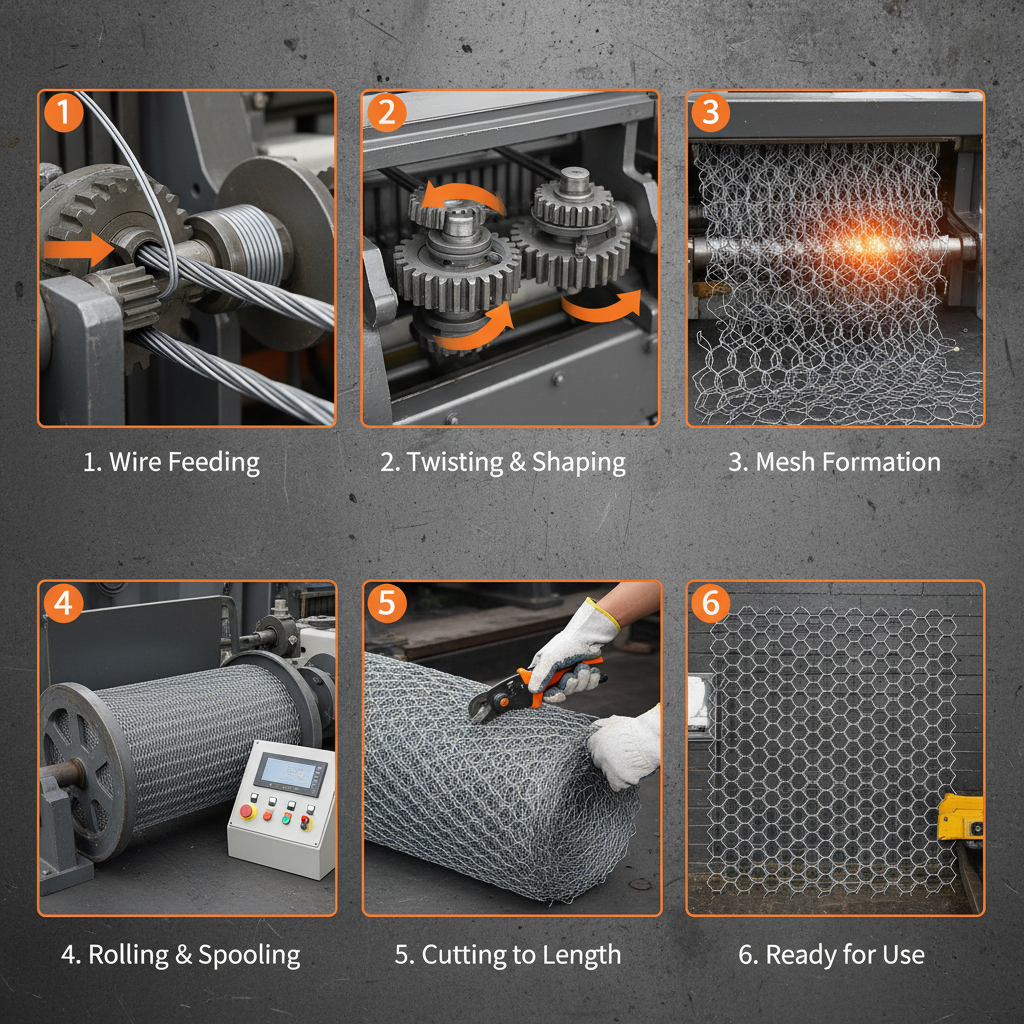
You know, lately everyone's talking about prefabrication. It’s all the rage. Used to be, if you wanted something built, you built it, on site. Now? Everything’s gotta be modular, offsite construction, quicker turnaround. Honestly, it's a bit of a scramble for us material guys. Demand’s up, but the specs… the specs are getting weird.
It’s funny, you spend years learning what works, what doesn’t, then suddenly everyone wants to try something new. We're seeing more and more requests for high-strength, lightweight materials – galvanized steel wire mesh being a big one. It’s not just construction, either. We’re getting inquiries from agriculture, filtration, even security firms. People are looking for robust, versatile solutions, and, well, wire mesh fits the bill.
The biggest challenge, though? Getting people to understand the subtleties. It’s not just about the gauge of the wire; it's the weave, the coating, the tensile strength… the whole package. I was at a factory in Foshan last time, they were trying to save a buck on the zinc coating, and you could smell the corrosion already. It’s a shortcut that will always bite you in the end.
The Current Landscape of iron wire mesh manufacturers
To be honest, the market is flooded. There are manufacturers popping up everywhere, especially in China. Some are producing genuinely good stuff, others… not so much. You’ve got your big players, the established names, and then a whole swarm of smaller companies trying to undercut them. Quality control is becoming a real issue.
What's interesting is the shift towards specialized meshes. It’s not enough to just offer standard galvanized steel anymore. Customers want stainless steel, PVC-coated, epoxy-coated, even meshes with specific aperture sizes for specialized filtration applications. It’s a sign of the industry maturing, but it also means we have to stay on our toes.
Common Design Pitfalls in iron wire mesh manufacturers
Have you noticed how many people underestimate the importance of the weave pattern? They just want a certain mesh size, without thinking about how it’s actually constructed. A plain weave is good for general purpose, but for anything with significant tension, a Dutch weave or a twill weave is much better. It’s the little details that make all the difference.
Another common mistake is specifying the wrong material for the environment. You wouldn’t use galvanized steel in a marine environment, would you? It’ll corrode in a matter of months. Stainless steel is the way to go, but it’s more expensive. People always try to save a few yuan, and then end up paying a lot more in the long run to replace it.
Strangely, I've seen folks try to design around availability instead of performance. “Oh, this gauge of wire is easier to get, so let's use that!” Nope. Wrong approach. You design for the application, then you source the materials.
Material Deep Dive: Beyond Just 'Steel'
It’s not just “steel,” you know? The grade of steel matters immensely. Low carbon steel is cheap, but it’s not very strong. High carbon steel is much stronger, but it’s also more brittle. And then you’ve got stainless steel – 304, 316, 316L… each with its own properties and price point. 316L is the best for corrosion resistance, but it's also the most expensive.
Galvanization… now that’s a process. It’s not just dipping it in zinc, there's hot-dip galvanizing, electrogalvanizing, and even zinc-aluminum alloys. Hot-dip is the most durable, but it can leave a rough finish. Electrogalvanizing is smoother, but not as corrosion resistant. You can smell the difference sometimes. Hot dip has a… metallic tang. Electrogalvanizing is cleaner.
And then there’s PVC coating. It adds another layer of protection, but it can also make the mesh less flexible. I encountered this at a filtration plant last time; they wanted a rigid mesh for a specific application, but the PVC coating made it too brittle and it cracked during installation. Anyway, I think choosing the right material involves a lot of trade-offs.
Real-World Testing: It's Not Always About Lab Results
Lab tests are fine, but they don’t tell the whole story. I've seen meshes pass all the lab tests and still fail miserably on site. The real test is how it holds up to actual conditions: temperature fluctuations, UV exposure, abrasion, constant handling.
We do a lot of on-site testing ourselves. We’ll take samples to construction sites and just… abuse them. We bend them, stretch them, scratch them, leave them out in the sun, even bury them in the ground. It sounds crude, but it’s the most reliable way to see how they’ll perform in the real world.
Performance Metrics of iron wire mesh manufacturers
How Users Actually Employ iron wire mesh manufacturers
You’d be surprised. We sell a lot of mesh to farmers for poultry fencing, but they often end up using it for everything else – reinforcing concrete, protecting gardens from pests, even making makeshift repairs to machinery. They're incredibly resourceful.
Then you have the construction guys. They use it for rebar spacing, crack control in concrete, and as a base for plaster. They'll even wrap it around pipes to protect them from corrosion. Honestly, they find uses for it that we never even imagined.
The Upsides and Downsides: A Pragmatic Look
Okay, let's be real. Wire mesh is relatively cheap, it’s strong, and it’s versatile. Those are the big wins. But it's not perfect. It can be difficult to work with – sharp edges, can unravel if not handled carefully. And it’s not always the most aesthetically pleasing material.
Another downside is corrosion. Even galvanized steel will eventually rust, especially in harsh environments. That’s where stainless steel comes in, but it’s a significant cost increase. There’s always a trade-off.
But overall, the benefits far outweigh the drawbacks. It’s a workhorse material, and it’ll continue to be for a long time.
Customization Capabilities and Case Studies
We can customize pretty much anything. Aperture size, wire diameter, weave pattern, coating… you name it. Last month, that small boss in Shenzhen who makes smart home devices insisted on changing the interface to , and the result was a complete nightmare. He wanted a super-fine mesh to shield the electronics, but with specific dimensions to fit inside his tiny enclosures. It took a lot of tweaking, but we got it done. He was happy, and that's what matters.
We did another project for a wildlife sanctuary; they needed a mesh to protect enclosures from predators, but it had to be non-toxic to the animals. We ended up using a special PVC coating that was specifically designed for that purpose.
It’s those challenging projects that keep things interesting. It’s not just about selling a product; it’s about solving a problem.
Key Specifications for Common iron wire mesh manufacturers Applications
| Application |
Material Grade |
Typical Aperture Size (mm) |
Recommended Wire Gauge (BWG) |
| Poultry Fencing |
Galvanized Steel |
25x25 |
19 |
| Concrete Reinforcement |
Stainless Steel 304 |
10x10 |
16 |
| Filtration (Coarse) |
Galvanized Steel |
50x50 |
14 |
| Security Screening |
Stainless Steel 316 |
3x3 |
20 |
| Insect Screening |
Aluminum |
1x1 |
24 |
| Industrial Filter Cloth Support |
Stainless Steel 316L |
0.5x0.5 |
26 |
FAQS
Honestly, it’s not considering the environment. Salt spray, acidic rain, constant abrasion – these things all take a toll. Galvanized steel is fine for general use, but if you’re near the coast, you really need to go with stainless. Saving a few bucks upfront will cost you a fortune in repairs down the road.
That depends on the application, but generally, you want to add a bit of overlap to allow for cutting and fastening. It's always better to have a little extra than to come up short. There are online calculators, but I usually just recommend adding 10-15% to your estimated needs. Better safe than sorry.
Hot-dip galvanizing is when they literally dip the steel into molten zinc. It’s a thicker coating, and it offers better corrosion resistance. Electrogalvanizing is more of a plating process. It’s smoother, but not as durable. For outdoor applications, always go with hot-dip.
Absolutely. Steel is highly recyclable. Most scrap metal yards will take it. It’s a sustainable material, which is becoming increasingly important. We try to encourage our customers to recycle any leftover mesh whenever possible.
Wear gloves, safety glasses, and use proper wire cutters. Seriously. It's deceptively sharp stuff. Avoid using abrasive cutting tools, as they can create a lot of dust and weaken the mesh. A good pair of bolt cutters or aviation snips are your best bet.
It depends on the environment, but typically around 10-15 years. In a coastal area, it might be closer to 5-7. You can extend its life by applying a protective coating every few years, but eventually, it's going to rust. That’s just the nature of the beast.
Conclusion
So, yeah, iron wire mesh manufacturers isn’t glamorous work, but it's essential. It's the unsung hero of a lot of projects, holding things together, protecting structures, and generally making life a little bit easier. It's about understanding the materials, knowing the applications, and being honest about the limitations.
Ultimately, whether this thing works or not, the worker will know the moment he tightens the screw. And that's the truth. If you’re looking for a reliable supplier, check out iron wire mesh manufacturers. They know their stuff.